AI STUDY METHOD PRESENTS
REVISION ARCADE
EVERY SUBJECT · EVERY LEVEL · 22 GAMES · COLLECT COINS
▶ ENTER FREE →
◆ INSERT COIN ◆
A-Level Geography Revision

Global Systems & Governance

Globalisation, trade and TNCs, global governance and the role of superpowers.

Quick check · one tap
Why do TNCs locate production in LICs?

Global Systems & Governance is a core part of A-Level Geography. Revise the key concepts and common mistakes below, then lock them in with the free games.

Key concepts

GlobalisationIncreasing interconnection of economies, cultures, politics through trade, ICT, migration.
WTOWorld Trade Organization (1995; 166 members); reduces tariffs and resolves trade disputes.
IMFInternational Monetary Fund (191 members); structural adjustment loans, often criticised for conditionality.
World BankProvides development loans; HIPC initiative cancelled debt for 37 countries.
Trade blocGroup of countries with reduced internal trade barriers; EU, NAFTA/USMCA, ASEAN.
Uneven developmentGlobal core-periphery patterns; high-income vs low-income GDP per capita gap.
TNCTransnational corporation operating in multiple countries; Apple, Nike, Shell are examples.
Global production networkGeographically dispersed supply chain; Apple iPhone sources from 43 countries.
OutsourcingContracting tasks to external firms, often abroad (Foxconn for Apple).
OffshoringRelocating own operations to lower-cost countries.
GlocalisationAdapting global products to local markets; McDonald's McAloo Tikki in India.
ReshoringBringing manufacturing back; US firms partly reshoring from China post-2018.
Gini coefficientInequality measure (0 = perfect equality, 1 = max inequality).
HDIHuman Development Index combining income, education, life expectancy (0-1).

What your exam board covers

Where Global Systems & Governance sits in each exam board's specification. Tap a board to see what it lists.

AQAGlobal systems and global governanceSpec 7037

Part of: Component 2 — Human geography

Source: AQA A-level Geography (7037) specification — Subject content, accessed 23 June 2026.

Learn Global Systems & Governance step by step

Free interactive mini-lessons: short screens, worked examples and quick checks. Pick your exam board:

Other boards:CCEAEdexcelOCR

Common mistakes to avoid

Questions where students often pick the tempting wrong answer — make sure you know the right one:

Why do TNCs locate production in LICs?✗ Because TNCs want to develop poorer countries and lift them out of poverty.   ✓ Lower labour costs, weaker regulation, access to raw materials, large potential markets, and government incentives like tax breaks in special economic zones.
What is the difference between a megacity and a world city?✗ Megacities and world cities are the same thing.   ✓ A megacity is defined by population (over 10 million); a world city is defined by global economic and cultural influence (e.g. New York, London) — so a city can be one without the other.
What is the difference between outsourcing and offshoring?✗ Outsourcing and offshoring are the same thing.   ✓ Outsourcing means contracting work to another company; offshoring means relocating work to another country. A firm can outsource without offshoring, or offshore without outsourcing (in-house overseas).
Why is HDI a better measure of development than GNI per capita?✗ Because HDI measures how happy people are.   ✓ HDI combines income, life expectancy and education, capturing quality of life — GNI per capita is just average income and hides inequality and non-economic wellbeing.

Practise Global Systems & Governance — free games

Test yourself with these quick revision games for this topic:
See all 22 games in the Revision Arcade →

More A-Level Geography topics

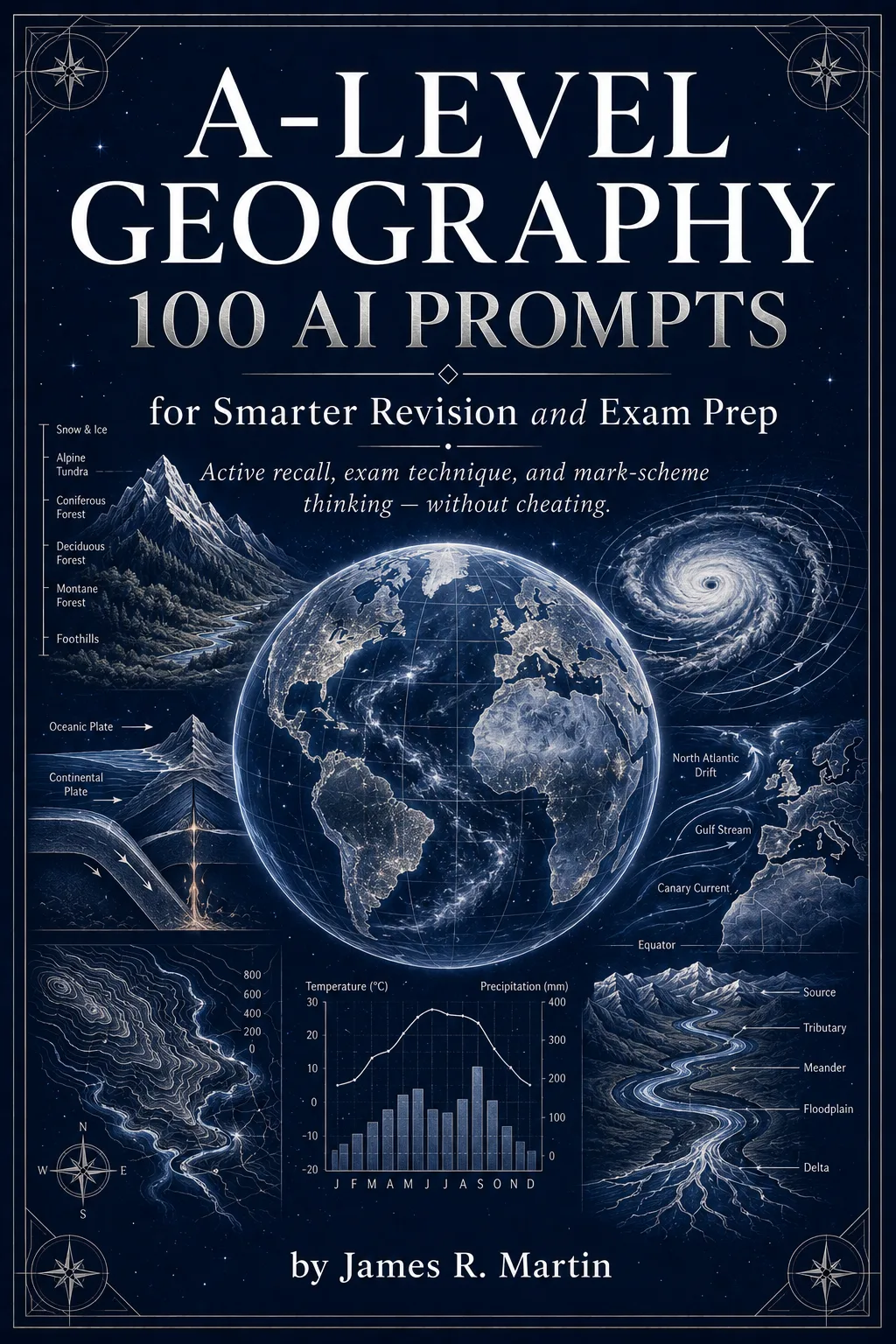
Cover of 100 AI Prompts for A-Level Geography
Free · PDF
100 AI Prompts for A-Level Geography

Print-and-paste prompts built around the Velvet Method, so ChatGPT tests your thinking instead of doing it for you.

Download free PDF →All 91 free prompt books

← All revision guides

Want to revise every topic this smart?

The Velvet Method shows you how to use AI to revise any subject, in six steps.

See the Velvet Method →