IB Economics Revision
The Global Economy
International trade, exchange rates, the balance of payments and economic development.
International trade, exchange rates, the balance of payments and economic development.
The Global Economy is a core part of IB Economics. Revise the key concepts and common mistakes below, then lock them in with the free games.
Where The Global Economy sits in each exam board's specification. Tap a board to see what it lists.
Source: IB Diploma Economics guide, accessed 23 June 2026.
Source: IB Diploma Economics guide, accessed 23 June 2026.
Free interactive mini-lessons: short screens, worked examples and quick checks. Pick your exam board:
Test yourself with these quick revision games for this topic:
See all 22 games in the Revision Arcade →
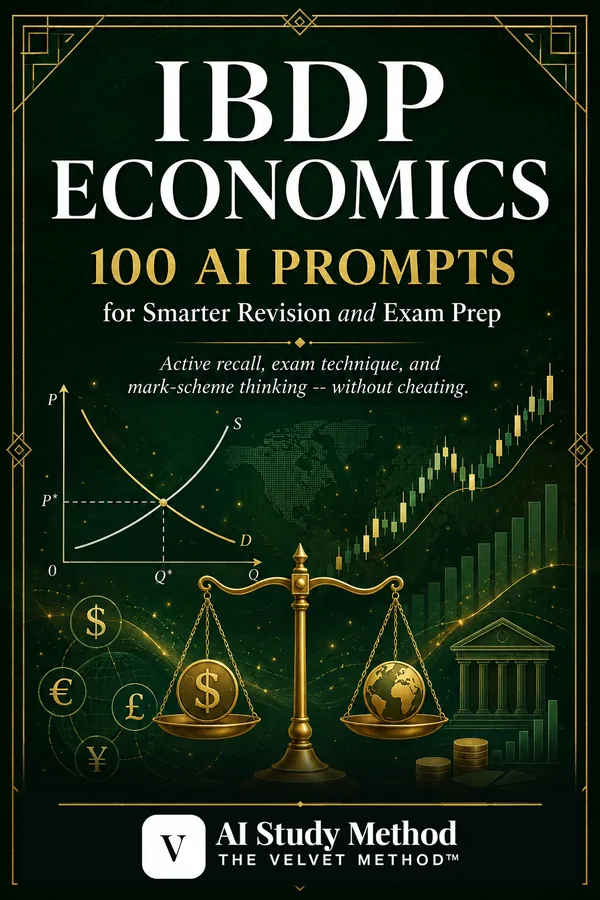
Print-and-paste prompts built around the Velvet Method, so ChatGPT tests your thinking instead of doing it for you.
Download free PDF →All 91 free prompt booksWant to revise every topic this smart?
The Velvet Method shows you how to use AI to revise any subject, in six steps.
See the Velvet Method →